
Few stories in the history of wildlife are as striking as the rise and fall of the passenger pigeon (Ectopistes migratorius). Once numbering in the billions, these birds darkened the skies of North America, only to vanish completely by the early 20th century. Today, their disappearance serves as a powerful lesson about human impact on the natural world, while sparking a heated debate: Could, or should, the passenger pigeon be brought back?
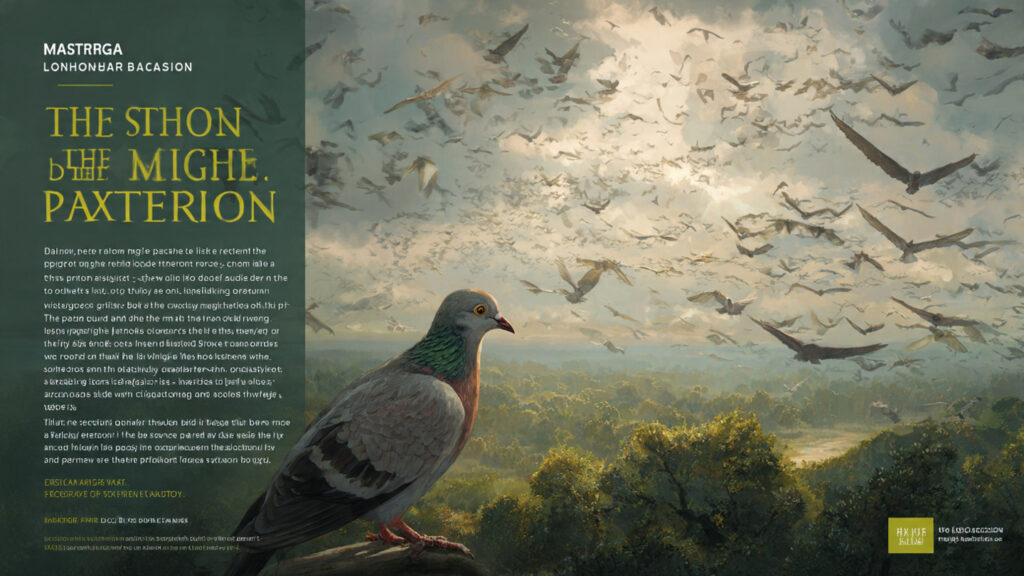
The Bird That Was Everywhere
During the 1800s, passenger pigeons were possibly the most abundant bird species on Earth. Historical accounts describe immense flocks stretching for miles, with numbers so high that they could block out the sun. Their migration and nesting habits relied on massive colonies, which helped protect them from predators.
Passenger pigeons were fast flyers, covering long distances in search of acorns, beechnuts, and other forest mast. Their social behavior was key to survival — a phenomenon known as predator satiation, where sheer numbers reduced the risk for individual birds.
The Collapse: Why Passenger Pigeons Went Extinct
Despite their overwhelming abundance, passenger pigeons suffered a rapid population decline in the late 19th century. The causes were complex but largely linked to human activity:
1. Industrial-Scale Hunting
Pigeons were hunted relentlessly for food and sport. Innovations like railroads and telegraphs allowed hunters to locate and harvest huge numbers efficiently. Entire nesting colonies could be decimated in a single season.
2. Habitat Destruction
European settlement expanded rapidly, clearing hardwood forests that pigeons relied on for feeding and nesting. The loss of continuous forest habitat made it impossible for these birds to form the massive colonies necessary for successful reproduction.
3. Social Collapse
Passenger pigeons relied on large flocks to breed and thrive. As numbers dwindled, breeding success plummeted, accelerating their decline. Small, fragmented groups could no longer reproduce effectively or defend their nests.
Martha: The Last Passenger Pigeon
By the early 1890s, sightings became rare. Conservation laws were too late to save them. The final known passenger pigeon, a female named Martha, died on September 1, 1914 at the Cincinnati Zoo. With her death, a species that once numbered in billions disappeared forever, marking a turning point in conservation history.
Can Passenger Pigeons Be Revived? The De-Extinction Debate
Recent advances in genetic technology have made it theoretically possible to bring back extinct species — a concept called de-extinction. Scientists propose using DNA from preserved specimens, combined with living relatives like the band-tailed pigeon, to recreate birds resembling passenger pigeons.
Potential Benefits
- Restoring Ecosystems: Passenger pigeons were key seed dispersers, shaping North American forests. Reintroducing them could revive ecological functions.
- Scientific and Conservation Value: The project could increase interest in biodiversity and conservation efforts.
Challenges and Concerns
- Habitat Availability: Much of the pigeons’ original forest habitat has been lost. Reintroduced birds might not survive in the wild.
- Genetic and Behavioral Differences: Even if recreated, the birds may not behave or interact as the original species did.
- Conservation Priorities: Some argue focusing on extinct species might divert attention from protecting endangered species today.
Lessons for Modern Conservation
The extinction of the passenger pigeon is a cautionary tale: abundance does not guarantee survival. Overexploitation and habitat destruction can wipe out even the most numerous species. The story also highlights the importance of early conservation measures and proactive environmental stewardship.
Whether or not science should attempt to bring the passenger pigeon back remains controversial. What is certain is that its disappearance teaches a lasting lesson about responsibility, stewardship, and the fragile balance of ecosystems.
